

Ethical Investing in the Age of AI
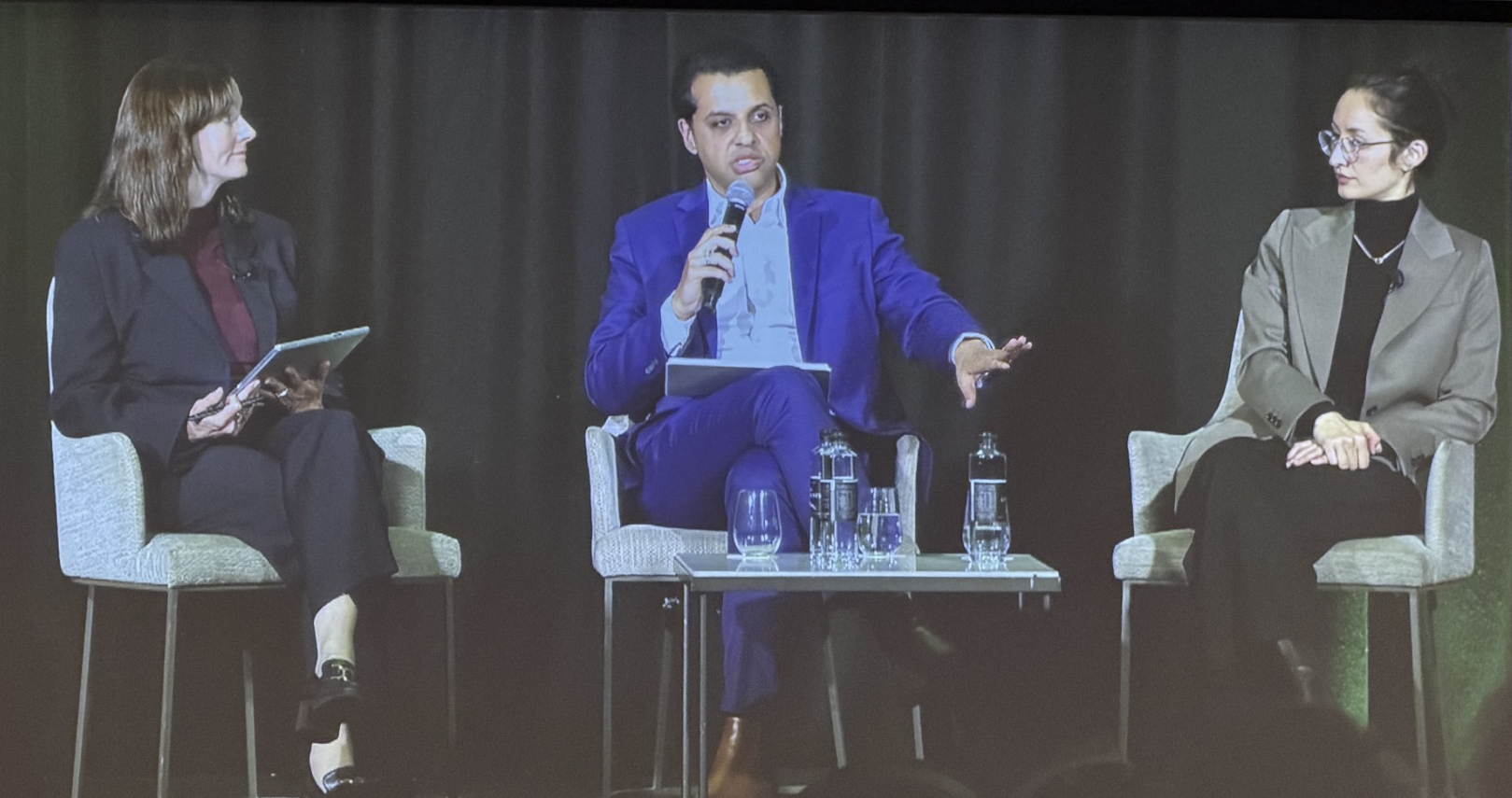
Estelle Parker, Vinnay Cchoda and Dr Kerry McInerney, from left, during “The AI reckoning” at the RIAA Conference Aotearoa NZ 2026 in Auckland. Photo: Dr Rodger Spiller.
Artificial intelligence is changing how we work, access information and make decisions. It is also raising important questions about our investments. What opportunities does AI offer? What are its implications for human rights and the environment? And how can we encourage its development and use to reflect the values we care about?
For ethical investors, these questions bring together financial considerations and the wider consequences of where our money is invested. Our portfolios may include companies developing AI, supplying its infrastructure or using it in their businesses. Understanding those connections is an important starting point.
These questions came into focus at the RIAA Conference Aotearoa NZ 2026 in Auckland, where Estelle Parker, Vinnay Cchoda and Dr Kerry McInerney contributed to a session titled “The AI reckoning”.
To mark Ethical Investment Week 2026 and its theme, The Legacy We Leave, I am sharing three separate Money Matters interviews with these speakers. I spoke with Kerry and Estelle at the conference and recorded a longer conversation with Vinnay in Sydney. Together, these interviews offer an introduction to ethical AI, practical guidance for investors and a deeper explanation of the businesses behind the technology.
The interviews also accompany the Ethical Investment Guide to Artificial Intelligence and Human Rights, an initiative of the Ethical Advisers’ Co-op and the Responsible Investment Association Australasia (RIAA), which I helped develop. Explore the three interviews on the Money Matters podcast page and download the Ethical Investment Guide to Artificial Intelligence and Human Rights.
Start with the foundations: Dr Kerry McInerney
What do we mean by artificial intelligence, and what makes its use ethical?
In A Quick Guide to Ethical AI, AI ethicist Dr Kerry McInerney provides a foundation for understanding the technology and its effects on people.
We explore why AI is not neutral: the choices made in its development, the data it draws on and the circumstances in which it is used can all influence its outcomes. These choices matter when AI affects people’s access to opportunities, reproduces discrimination or changes who holds power.
Kerry encourages us to ask who benefits, who bears the costs and whether AI is the right tool for a particular task. These are useful questions for everyday life as well as investing.
Connect the issues to your investments: Estelle Parker
How can investors put these concerns into practice?
In Ethical Investment Guide to AI and Human Rights, RIAA Co-CEO Estelle Parker explains the Guide and its relevance to investment decisions.
Our conversation considers misinformation, inequality, bias and access to AI, alongside environmental concerns such as the water and energy demands of data centres. We also discuss whether companies’ existing climate and nature strategies adequately address their expanding use of AI.
Estelle helps connect these issues with questions investors can ask their financial advisers and fund managers, making an unfamiliar subject more accessible and actionable.
Explore the AI ecosystem: Vinnay Cchoda
Understanding AI as an investor also means understanding the different businesses involved.
In AI Explained: A Guide for Ethical Investors, Vinnay Cchoda, Responsible Investment Manager at Betashares, explains a framework covering four layers: semiconductor companies, cloud infrastructure, foundation-model developers, and software and platform companies providing applications.
This helps us see why AI’s opportunities and ethical risks differ across businesses. We discuss how investors can assess those differences, examine evidence behind company commitments and use engagement to encourage responsible practices.
The conversation also explores collaborative engagement and AI governance initiatives.
Questions worth asking
You do not need to become an AI specialist to take a more informed interest in your investments. A conversation with your adviser or fund manager could begin with:
Where are my investments exposed to AI, including companies developing and using it?
How are human rights and environmental risks assessed?
What evidence shows that companies are putting their commitments into practice?
How does my fund manager engage with companies, and what happens when concerns remain unresolved?
For me, these conversations return to a longstanding purpose of ethical investing: helping people make money and make a difference. As AI develops, informed investment decisions and responsible ownership can contribute to how its benefits and harms are shared.
Explore the three interviews on the Money Matters podcast page and download the Ethical Investment Guide to Artificial Intelligence and Human Rights.
If you would like to discuss how your investments can reflect your values and the legacy you wish to leave, contact Money Matters.
This article and the interviews provide general information and education, not personalised financial advice. Money Matters is not endorsing or recommending any particular fund or strategy discussed.