

Lighter: The Forgotten Fourth Dimension of Successful Investment

The Money Doctor at The Classic Comedy Club, 18 June 2026
As an investment adviser, I ‘engage’ with fund managers and companies to encourage them to adopt a stronger 4D (longer, wider, deeper and lighter) perspective and implement associated practices, such as transformational leadership development. This engagement is intended to help funds and companies perform better and our investment clients’ money matter more. We aim to create more sustainable wealth and well-being and to transform money, business and the world. I wholeheartedly encourage fund managers to ask company leaders they are considering investing in: How are those companies investing in developing the ‘lighter’ and ‘deeper’ sides of ‘human capital’ and specifically what they are doing to be more fun?!
For example, I’m involved with an approach that offers a workshop titled ‘Are We Having Fun Yet?’ The key takeaways from this workshop are:
Embrace joy and playfulness as transformative forces.
Cultivate a ‘light touch’ in navigating life’s challenges.
Uncover the profound truths that often hide behind moments of laughter.
Discover the art of balancing depth and lightheartedness on your inner journey.
My exploration of the ‘Lighter’ dimension recently led me somewhere I never expected to find myself the New Zealand Comedy School Stand-Up Comedy Course. It is described as “New Zealand’s first and only comprehensive comedy class” which was reassuring, because if I was going to embarrass myself in public, I wanted to do it comprehensively.
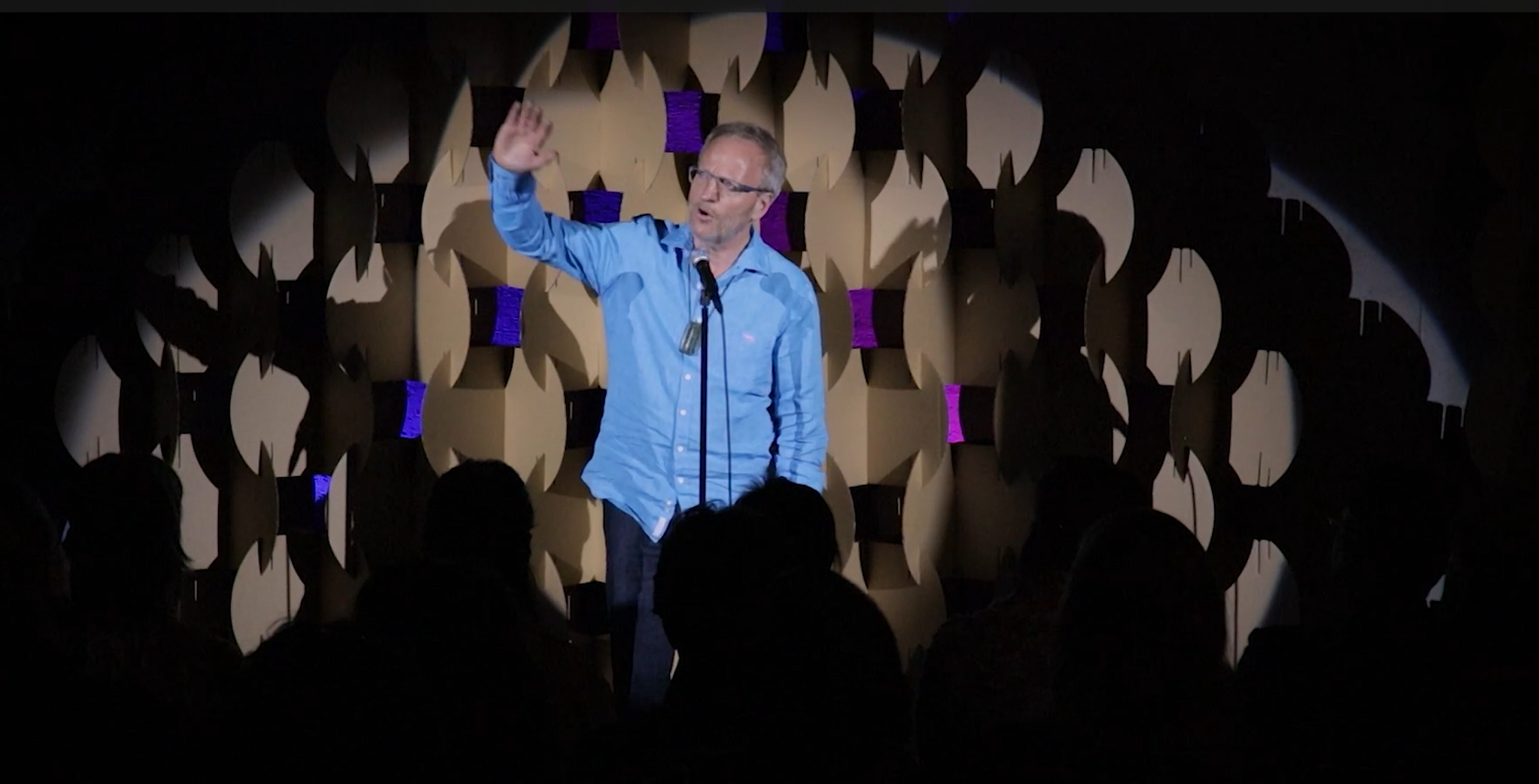
I thoroughly enjoyed the course, especially the grand finale: performing live at the sold-out Comedy School Graduation Show at The Classic Comedy Club on 18 June. The photos above are from the show: one captures a last-minute appeal to the comedy gods; the other suggests conditional approval may have been granted.
You can watch my stand-up debut at this link at this link and if you enjoy it and would like to see more, I’d be very grateful if you liked and shared the video and subscribed - partly for the algorithm, but mostly because this may be your only chance to like my debut before we discover whether the world is ready for a sequel. For reasons still under review, one may already exist.
It was fun to attend the recent ‘Wankernomics’ event in Auckland presented by James Schloeffel and Charles Firth from Australia. As described on their website, “This is the must-have handbook for navigating the buzzwords, bureaucracy and bullshit of the modern working world. From pointless meetings and passive aggressive emails, to meaningless purpose statements and impressive-sounding acronyms (ISAs), you’ll learn how to outmanoeuvre your colleagues with nothing more than an obnoxious Linkedin profile, a passive aggressive email and the phrase ‘circle back’. Part self-help book, part scathing satire, the book is a laugh-out-loud, wince-inducing ‘oh-my-god-that’s-exactly-what-happens-at-my-work’ account of the way we work.”
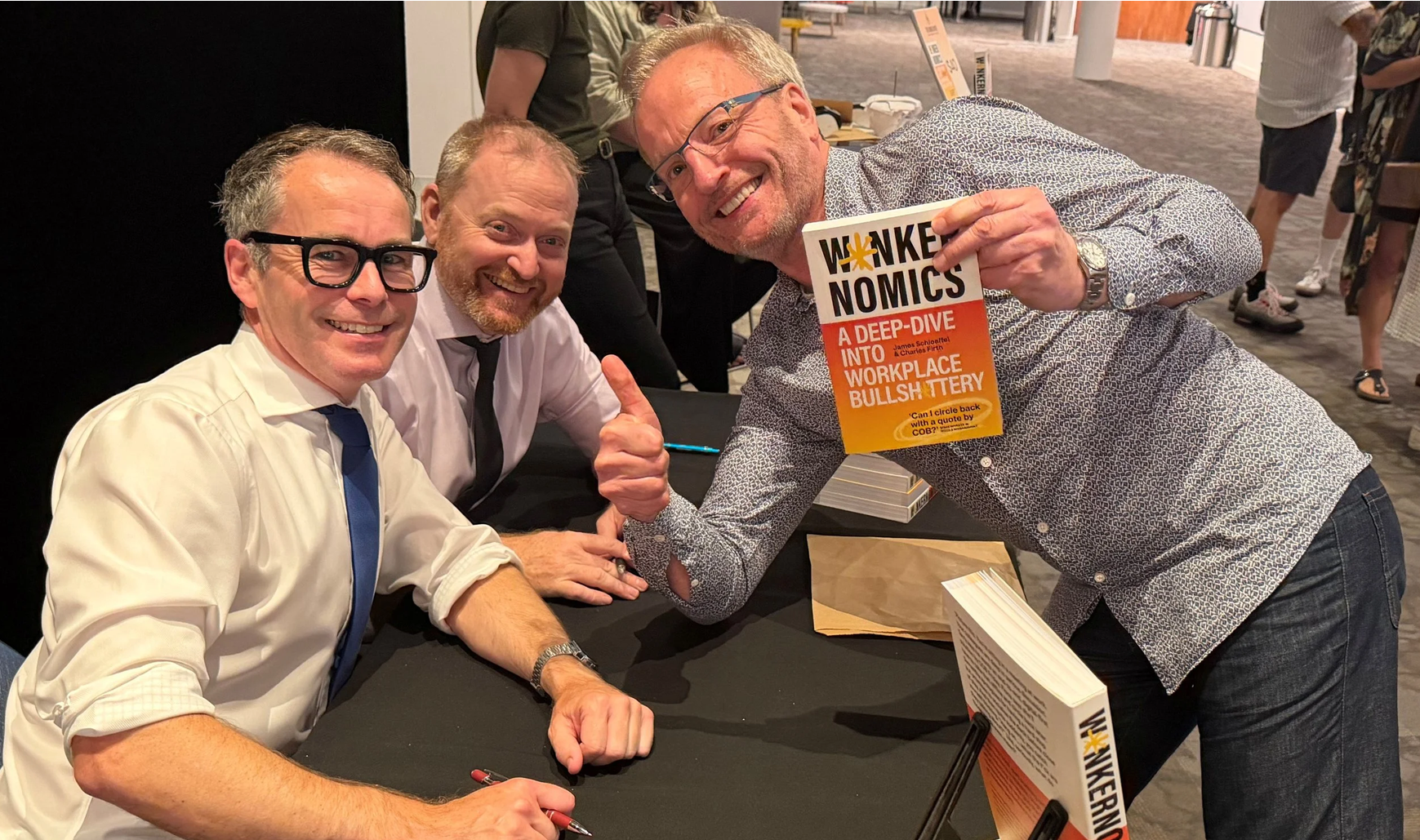
The authors encouraged me to apply the approach to investment. Here are some initial offerings:
“We’re overweight equities”
→ We’re hoping shares go up and don’t want to miss out“Tactical asset allocation tilt”
→ We made a guess… but in a sophisticated way“Market dislocation presents opportunity”
→ Things are falling… but let’s sound optimistic“Volatility is your friend”
→ This is uncomfortable, but please don’t panic-sell“We maintain a long-term conviction”
→ We’re sticking with this… for now“Alpha generation strategy”
→ We’re trying to beat the market (like everyone else)“Downside protection overlay”
→ We bought something expensive to reduce risk (maybe)“Liquidity event”
→ Someone sold something big
Stay tuned for more from me on this subject! I’ve also enjoyed meeting and learning from Berlin-based Belina Raffy (a former finance professional). Her website describes how she “uniquely combines exquisite facilitation skills, global environmental and social project experience, and a profound understanding of how to help nervous people to shine while being generous, connected, and loving…This course has run over 50 times online and across 11 countries. It was part of National Science Week in Australia twice. Alumni include climate scientists, humanitarian workers, sustainable transport professors, and more”. I signed up for her recent course so stay tuned!
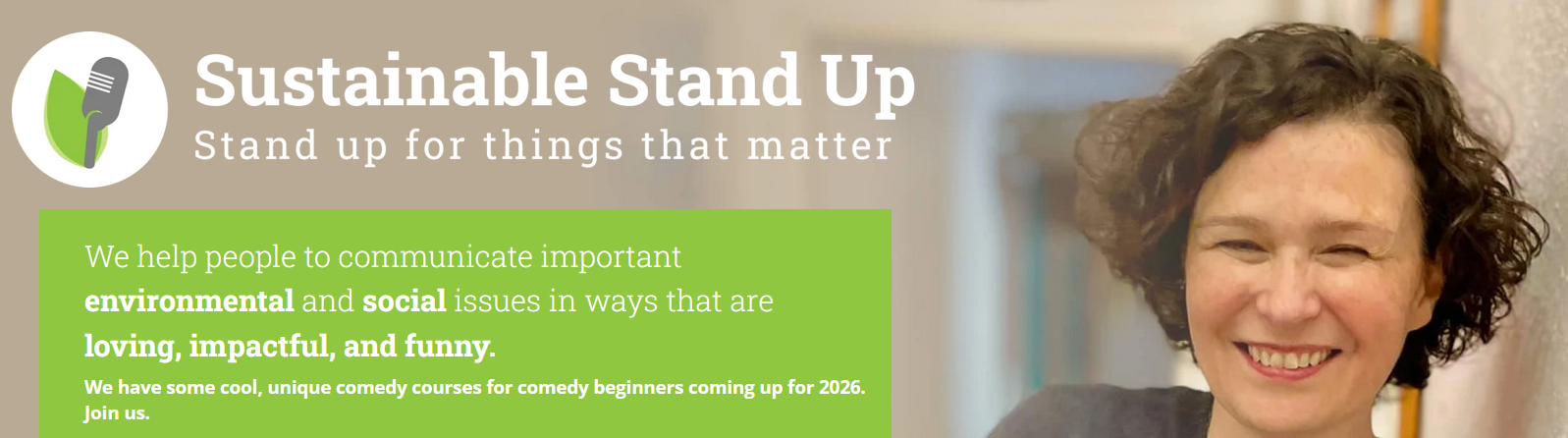
A Stand-Up Response to the Climate Crisis
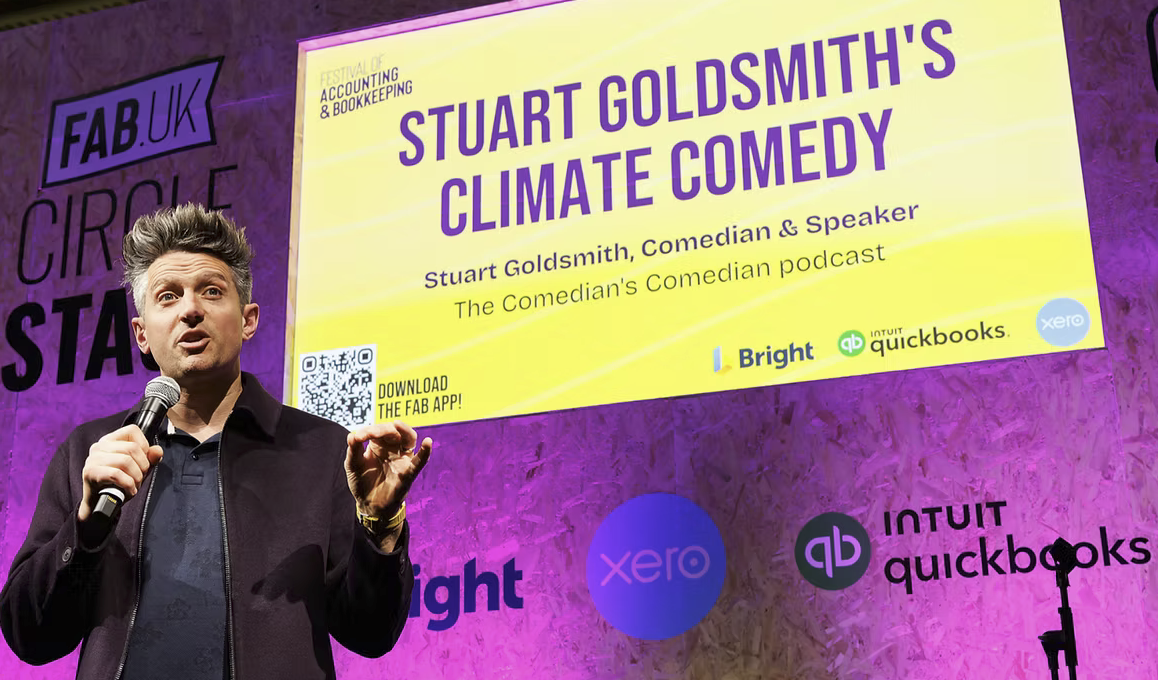
I learned about Belina from “sustainable stand-up” Stuart Goldsmith - a climate comedian, podcaster, and business speaker who is bringing humour to one of the most serious challenges of our time.
Stuart has performed internationally, appeared on Live at the Apollo, and has carved out a distinctive niche: using comedy to engage audiences on the climate crisis. His work is not about trivialising the issue - quite the opposite. It is about helping us face it more honestly.
On his website, he describes his corporate offering as hosting and performing climate comedy for conferences, corporate events, and award ceremonies - with the goal of engaging audiences in sustainability, calling them to action, and alleviating our collective dread by tackling a serious subject through an entertaining medium.
This is a powerful example of the “lighter” dimension in action - not avoiding reality, but making it more accessible and actionable.
I’ve followed Stuart’s podcast, The Comedian's Comedian Podcast, for quite some time. It is a rich exploration of creativity, craft, and the inner world of comedians and, more broadly, what it means to think differently. With over 500 episodes and a wide range of insightful guests, it has become a remarkable body of work in its own right.
I also joined his Insiders Club on Patreon - a small monthly contribution that provides access to additional content and a community of people exploring the creative process. There’s something quietly satisfying about supporting work that brings both insight and lightness into the world.
What I particularly appreciate about Stuart’s approach is that he doesn’t just make people laugh, he helps them move. From awareness to engagement. From dread to agency.
That, to me, is the essence of wise humour.
Pic credit: Alistair Veryard
Another funny and wise person I’ve been honoured to meet recently is Jo Randerson, author of the wonderful book ‘Secret Art Powers’- “six ways that thinking like an artist can increase personal resilience, unleash innovation, dissolve unhealthy power relationships and help us describe and navigate the complex and changing world of the twenty-first century, and to sing while we do it”. I’m not planning on much singing; however, I’m looking forward to Jo helping me create my versions of videos inspired by the amazing Make My Money Matter videos. The videos below featuring Jo and friends are well worth watching!
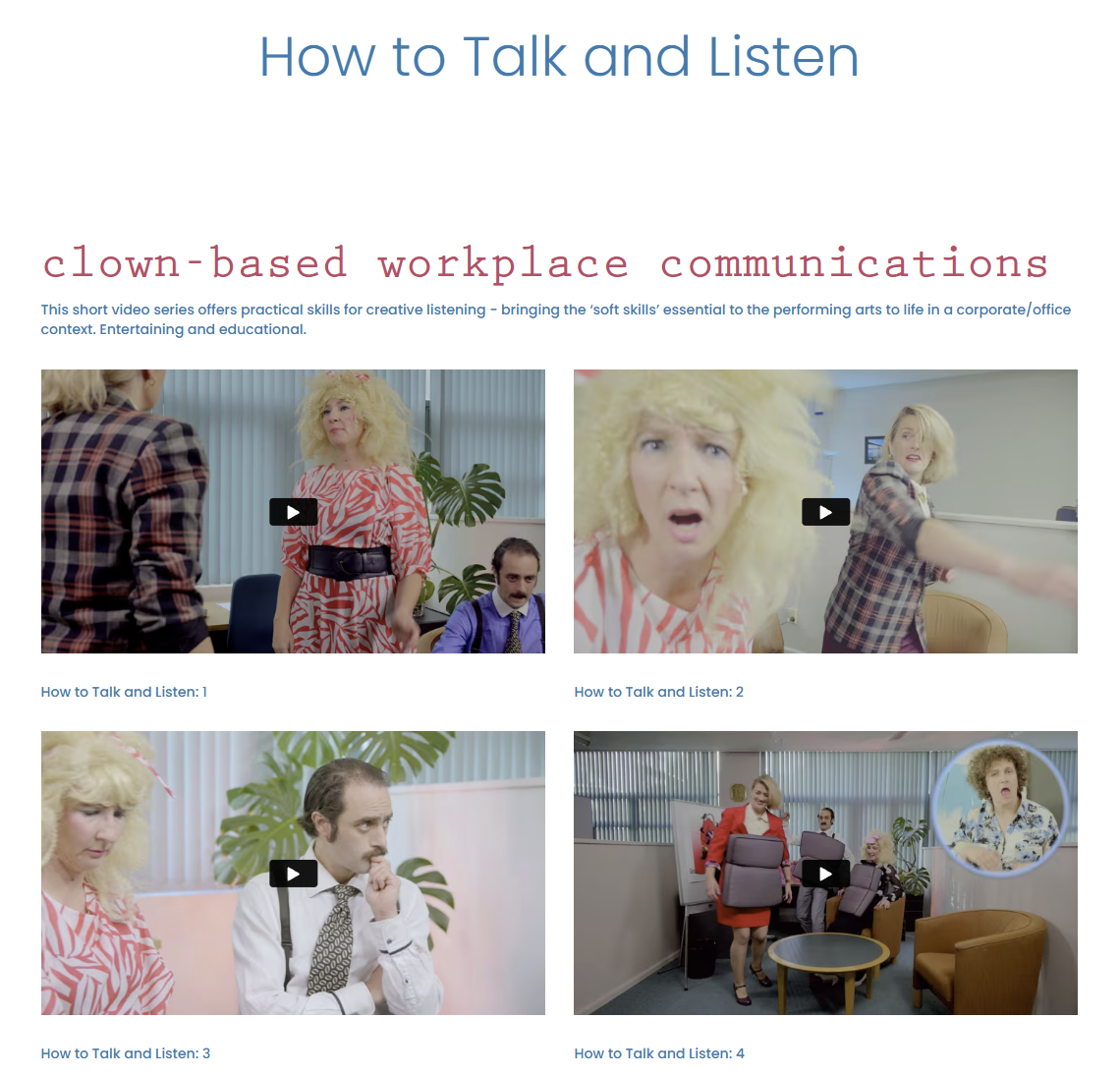
Click the image or the link here to watch these videos.
As described on their website: “Secret Art Powers began life as a series of interactive illustrated talks, and finished as a book in which Jo Randerson outlines six counter-cultural powers central to art thinking: lies, multiplicity, fluidity, failure, live body, and imagination. In between, six short animations were created by Jo and creative collaborator Steffen Kreft: one for each chapter of the book. These visual poems distill the essence of the Secret Art Powers and can be used as meditations for anyone looking to spark a fresh approach to life.”
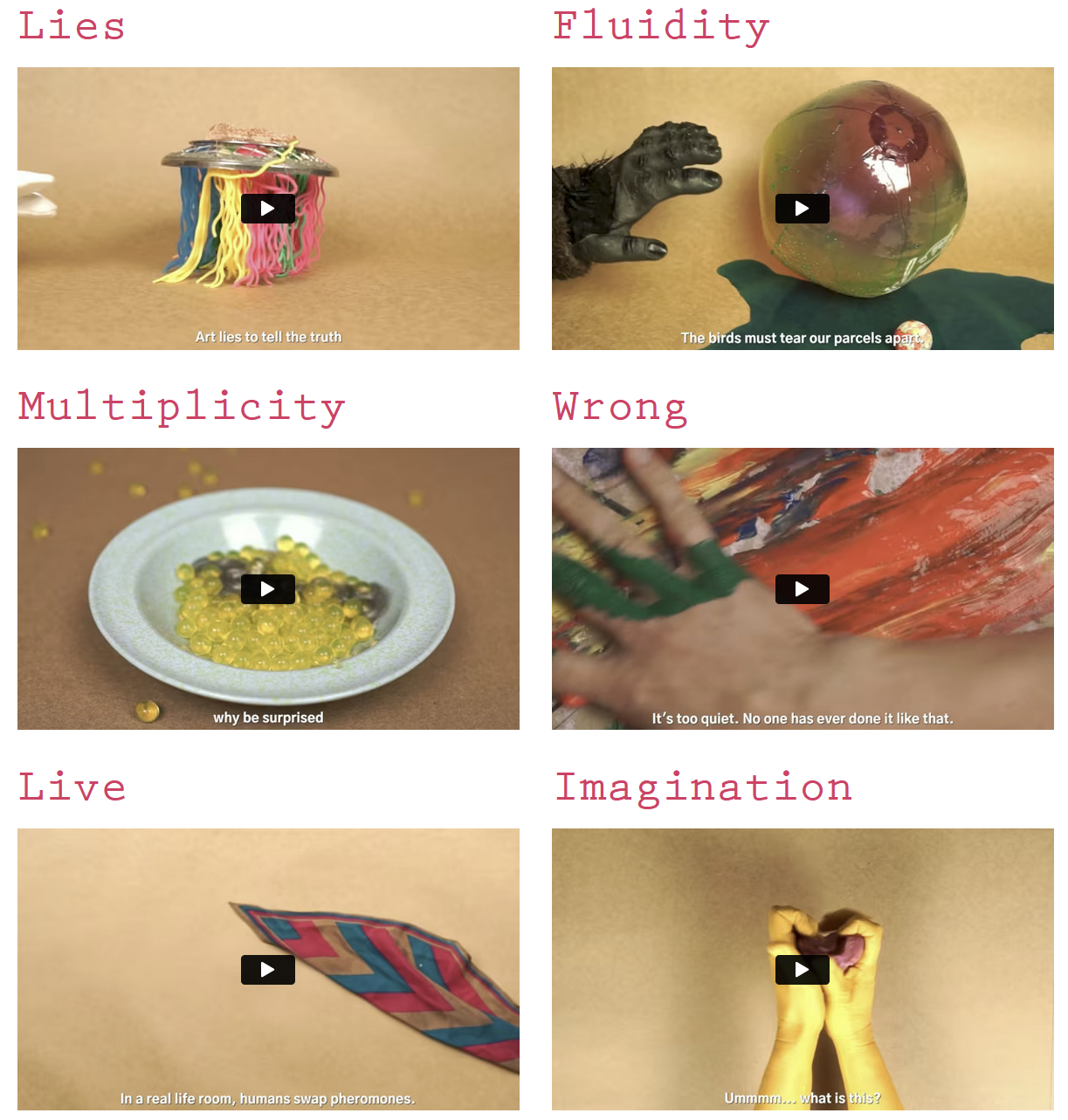
Click the image or the link here to watch these videos.
My exploration of the ‘Lighter’ dimension also took me to the New Zealand Comedy School Storytelling course facilitated by Robin Wachsberger “teaches you how to generate ideas for great stories, structure a story for the stage, and perform it with panache.” I enjoyed the course and the experience of performing my story live at the Comedy Club graduation.
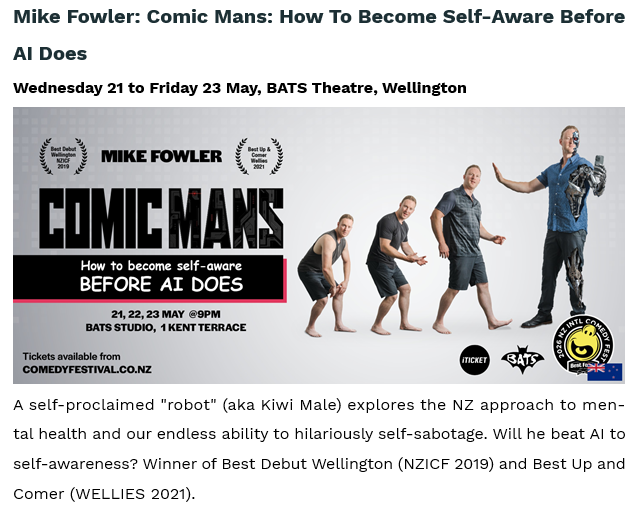
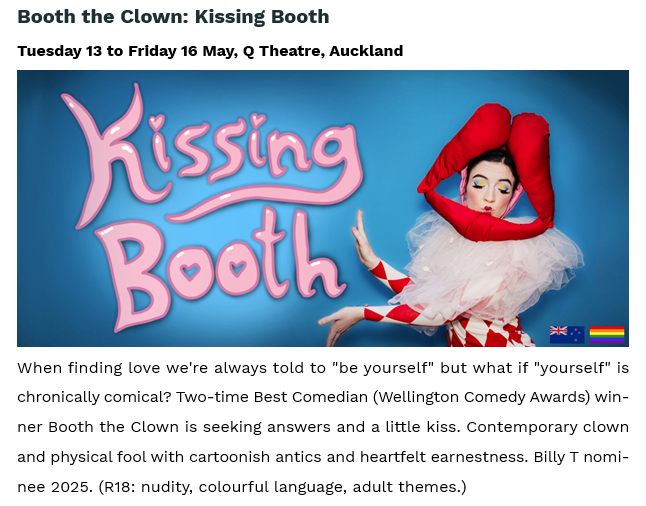
UPDATE: The NZ International Comedy Festival, 1 -24 May, featured, at last count, thirteen Comedy School alumni. students. Here are examples from Wellington and Auckland:
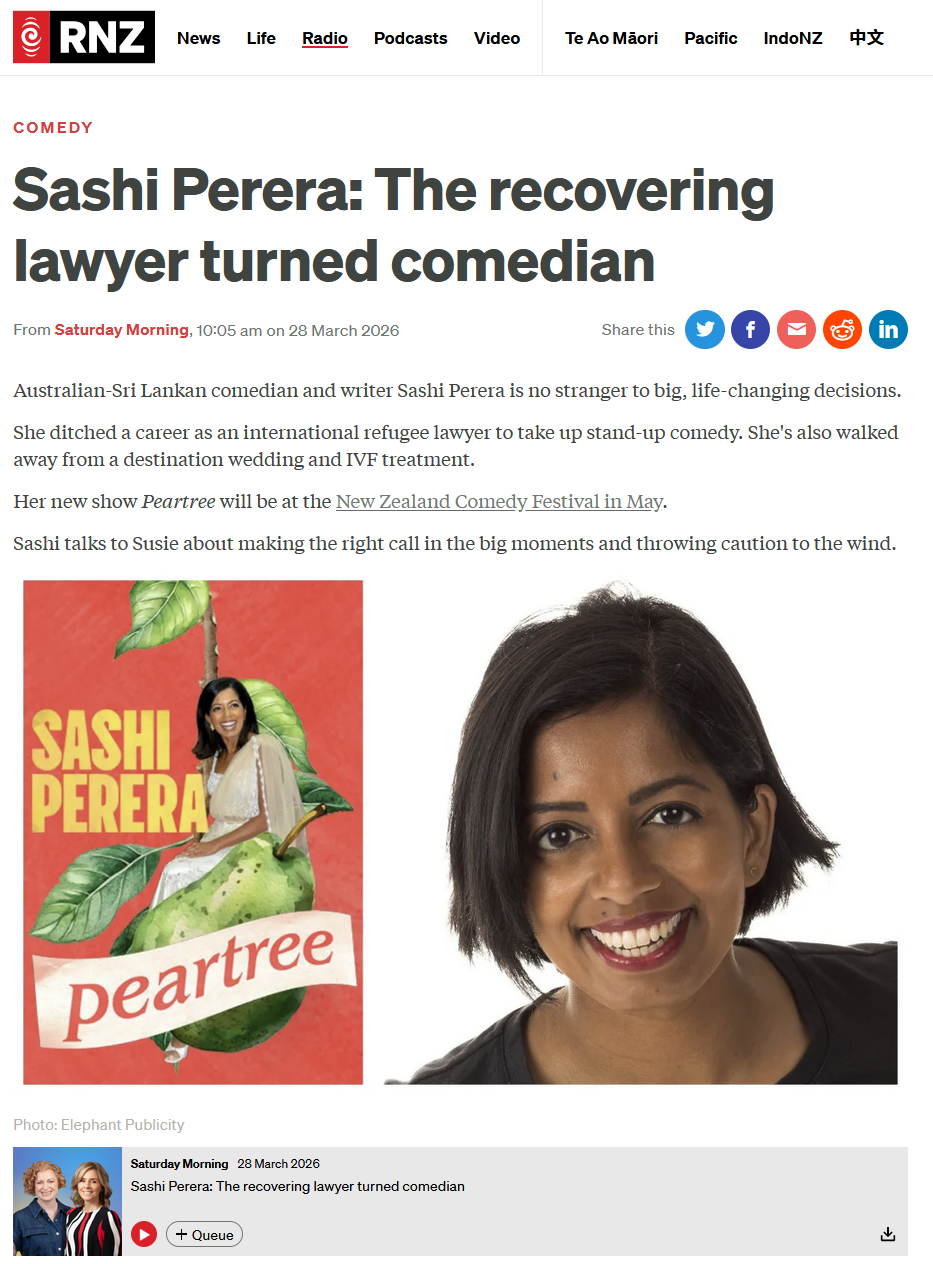
A Comedy Festival highlight fort me was the new show Peartree by Australian-Sri Lankan comedian and writer Sashi Perera at The NZ International Comedy Festival. Her RNZ interview was fascinating, including her stories from working as an international refugee lawyer before taking up stand-up comedy full-time.
I recommend a subscription to John Cleese’s Cleese Products Substack to anyone interested in comedy, creativity and the serious uses of laughter. In a recent subscriber video, Cleese brought the value of the ‘Lighter’ perspective home for me in a different way. I won’t reproduce it here - subscribers should hear it from Cleese himself - but two reflections particularly stayed with me.
The first was a story he had been told by people who lived in Sarajevo during the siege in the 1990s. Amid danger and hardship, they created a makeshift cinema in an underground car park and watched comedy films, particularly Monty Python films. Their circumstances had not changed when they came out. But after laughing together, they felt better, less overwhelmed, and more able to face what was still there.
That seems to me a profound expression of the ‘Lighter’ dimension. Laughter does not deny suffering. It does not magically solve the problem. But it can shift our relationship to the problem. It can give us a little more distance, a little more perspective, and perhaps a little more courage.
The second reflection was Cleese’s observation about a certain British male style of affection: for some men of an older generation, direct emotional expression was difficult, so warmth often arrived in disguise - through teasing, mock insult or verbal sparring. It also points to an important distinction. Humour used with malice can wound. Humour offered with affection can connect. The difference is not always in the words alone, but in the spirit behind them.
Cleese concludes with a line that neatly sums up the deeper point: “My parents’ generation used to say laughter is the best medicine, and they were right.”
That resonated with me not only because Cleese is a comedy hero of mine, but because it is something my parents often told me and something my soon-to-be 91-year-old mother still does. They understood, often instinctively, that laughter could puncture pomposity, keep things in perspective and help people carry on.
That, for me, is why the ‘Lighter’ dimension matters. It can bring more joy, playfulness, humanity and perspective to the serious parts of life. Sometimes laughter is not an escape from reality. It is one of the ways we become better able to meet it.